Inttwin and Drawing Intelligence
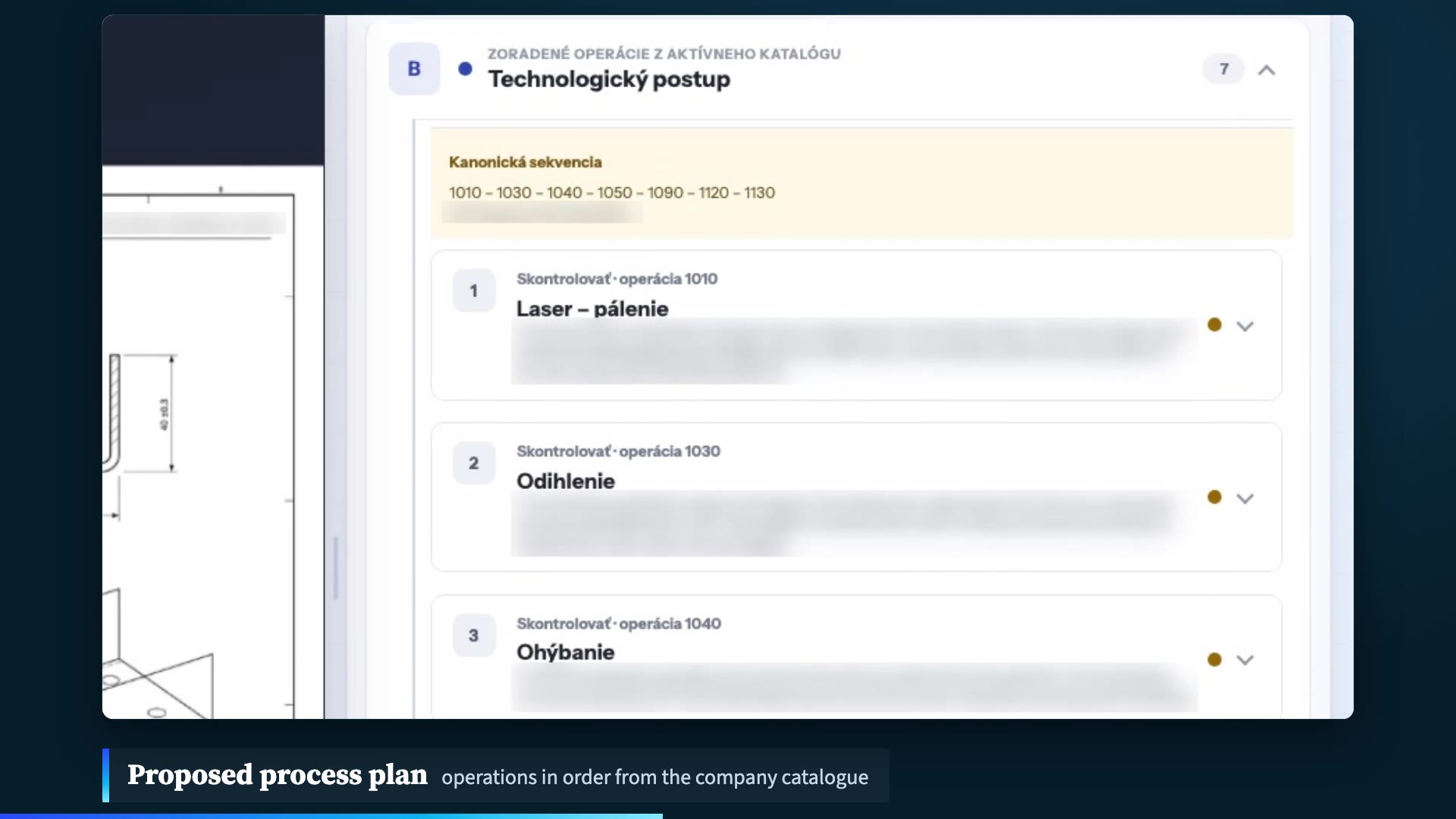
A modular agentic platform for business operations. Drawing Intelligence is advanced expert analysis of drawings and automated preparation of input data for downstream processes such as costing or production orders.
Engineering Software & Applied AI for Industry
Real software, real outputs and measurable acceptance criteria. No generated screens and no invented results.
Real recordings from our software, using fictional companies or sample data.
A modular agentic platform for business operations. Drawing Intelligence is advanced expert analysis of drawings and automated preparation of input data for downstream processes such as costing or production orders.
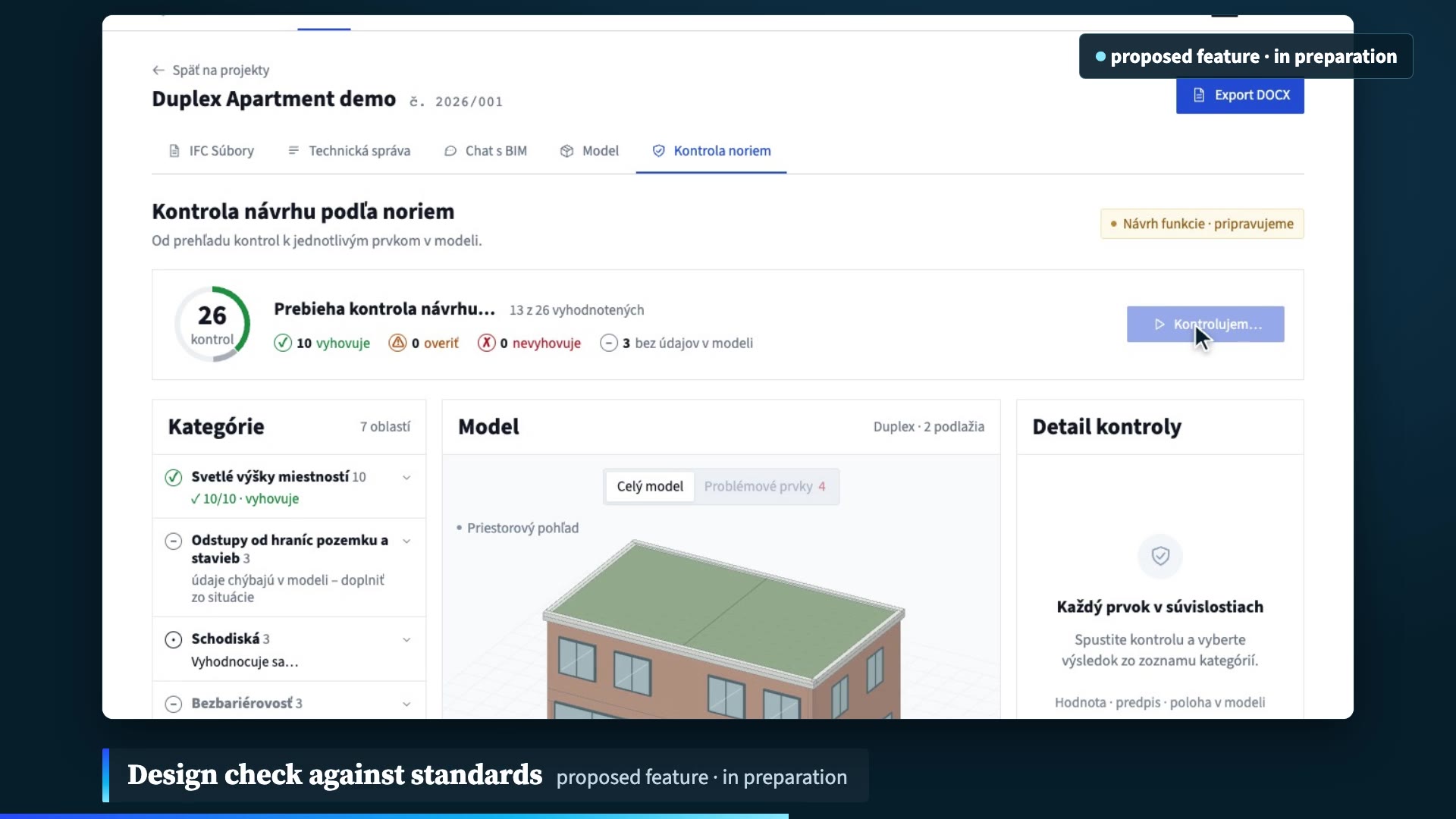
From a 3D building model in IFC format and project data, it compiles a technical report section by section from a template, with export to Word. It flags missing data in the model.
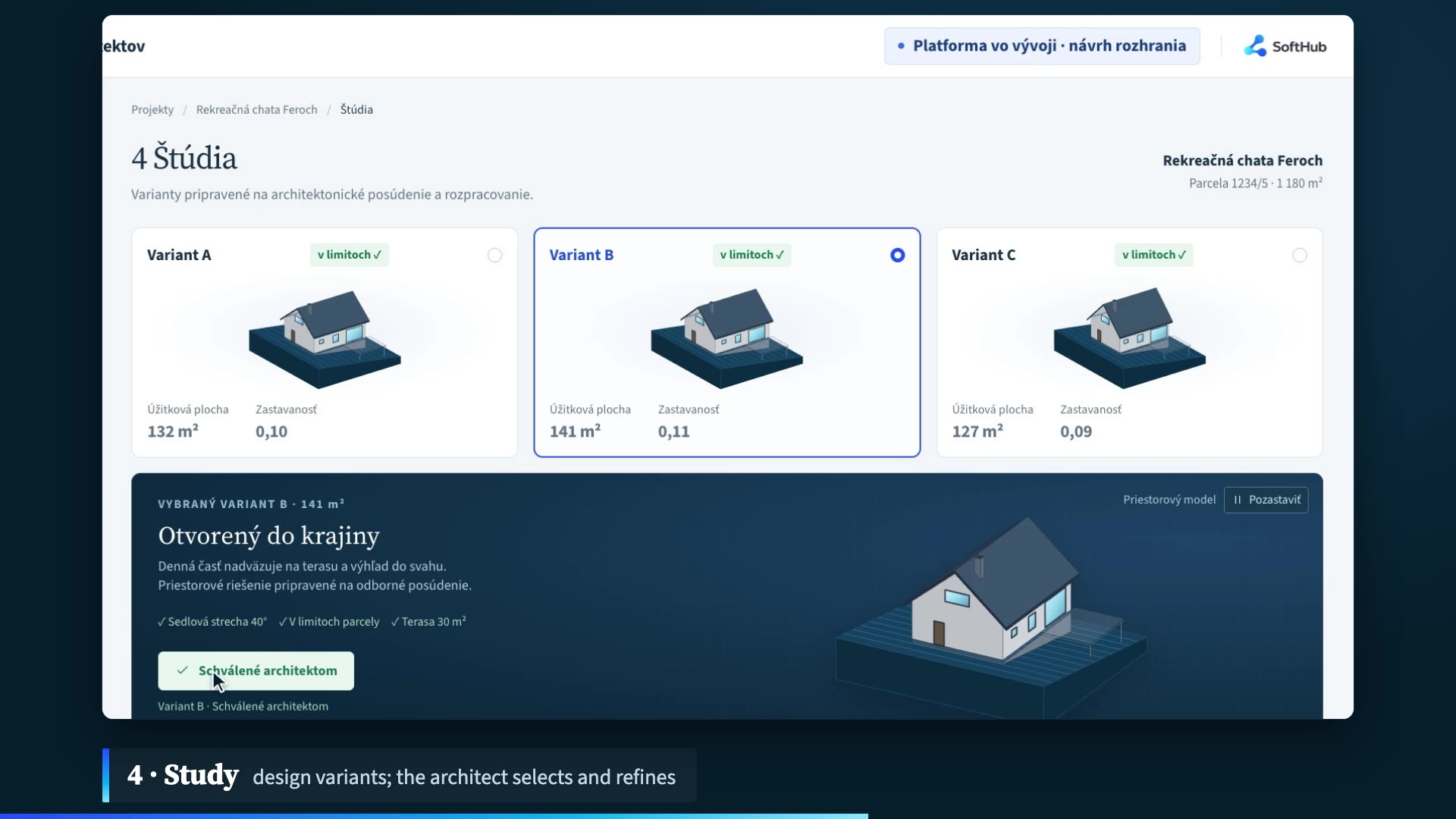
We are developing a platform that automates the architect’s work step by step – from the first conversation with the client through the study and specialists to review and submission – and works with 2D drawings as well as the BIM model.
We validate extraction against agreed fields and representative customer drawings. Results that do not meet the configured confidence or validation rules are routed for review.
If we publish an accuracy figure, it states what was measured, on which sample, how many items, which drawing types, which metric, which uncertainty threshold and the test date.
Technical drawings and project data can contain sensitive know-how. We therefore define data handling as part of the deployment – not as a generic promise.
Depending on the solution, processing may combine local components with external services. We aim to minimise the data sent outside the local environment and document the relevant providers, retention and review points for the agreed architecture.
We do not use “100% secure” or “your data never leaves” as blanket claims. Those statements are only appropriate where a specific deployed architecture can actually guarantee them.
Manufacturing and engineering
Inputs for costing and production orders are retyped by hand from technical drawings – dimensions, material, operations and the bill of materials.
Drawing Intelligence reads the drawing and prepares structured inputs. For every value it stores the location on the drawing it came from and flags what is uncertain. It exports the assembly bill of materials to XLSX and JSON.
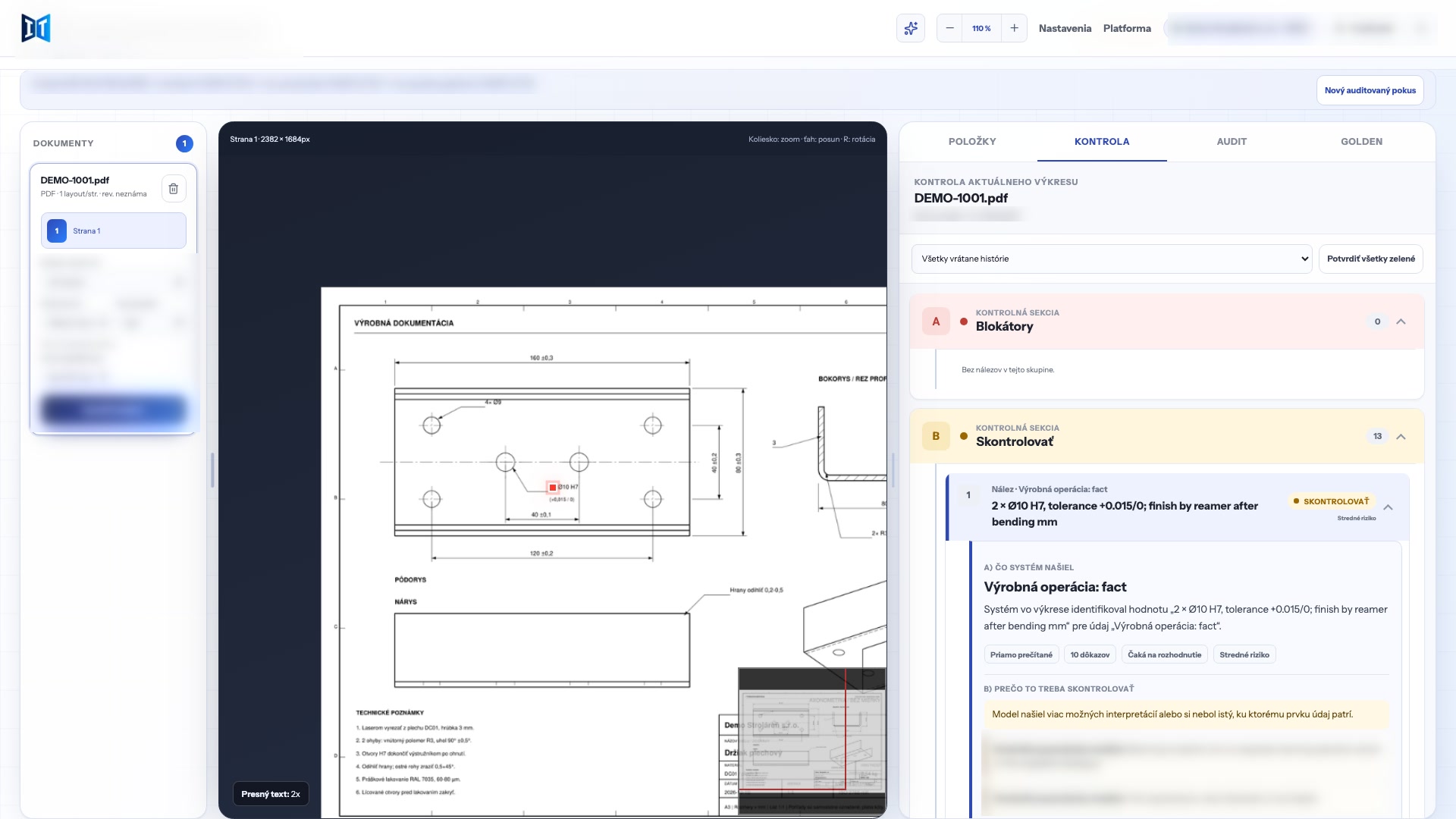
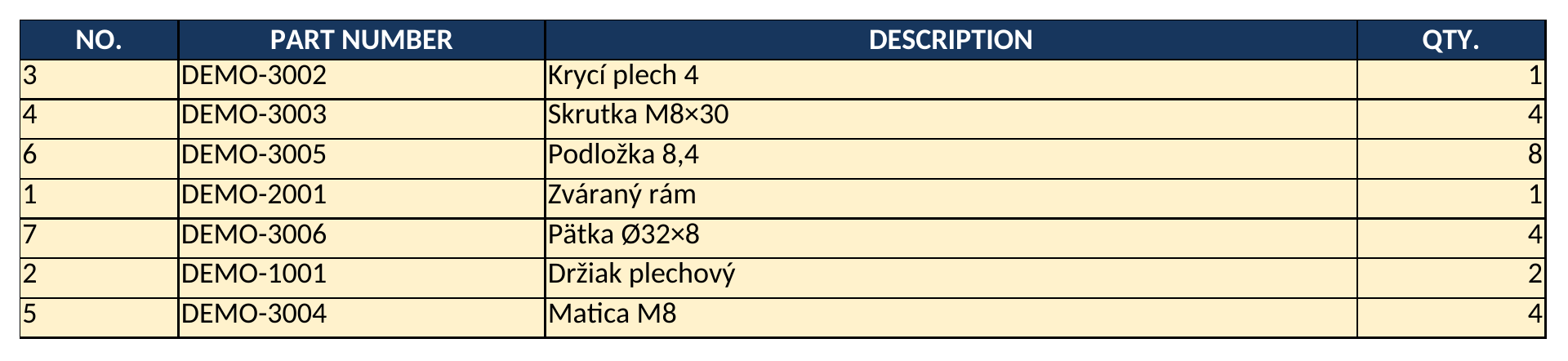
Every exported item goes to human review: each cell in the file carries a ‘Check’ note and the case is marked ‘review required’ in the application. A process engineer confirms uncertain points.
It does not replace the process engineer or their sign-off. We do not state time savings or accuracy percentages until we have measured them.
Our own operations
The company website did not describe what the company does today: products, ways of working and real examples were missing.
A new website in Slovak and English: 22 pages and 8 product videos made from real interface footage. From project start on 18 October 2026 at 16:48 to publication on 19 October 2026 at 10:09.
A live website in two languages.
Before publication, independent checks covered the approval cards, footage and claims: 10 audits before approval, 5 video deployment checks, 8 footage provenance and anonymity checks and 2 post-deployment checks. After launch – not before it – an independent code review by a different agent than the author, reading a clean copy of the code, found no critical or high-severity issues and three medium-severity ones; two were fixed and verified on the live site the same day, and the third became moot when the related control was removed. Publication and changes were approved by a person by fingerprint (4 times). 44 automated browser tests ran before every deployment. The reviews caught, for example, prototype figures that could have come from real data. The founder caught three further issues the checks had missed, including an illustrative video in place of real footage.
This case describes process and time, not a financial result.
We have fundamentally raised software quality and, at the same time, fundamentally scaled our capacity – by organizing and optimizing communication and context.
These figures describe how we develop software internally. They are not customer results.
9
projects
650+
AI developer runs
30,000+
lines of code and tests
80+
written reviews and audits
Internal records, snapshot 19 Oct 2026, 16:45. An AI developer run is a thread with at least one minute of work. Lines of code are not a measure of quality or authorship; a run is not a finished task.
Controlled trial, 19 October 2026: on 10 real, previously solved tasks, our managed way of working reached the same time and comparable quality (36 of 37 criteria vs 37 of 37) with 38% lower compute in the orchestration layer; the coding agent used about 7% more. The comparison mode had two fewer serious findings. Small sample: 10 tasks, mostly from one repository, one day; the comparison mode still used part of our rules.
Method: figures are deduplicated and counted by scripts without AI, reading our records only. Each figure states its period and as-of date.